
Fight, Flight, Freeze, & Fawn: Understanding Your Stress Responses
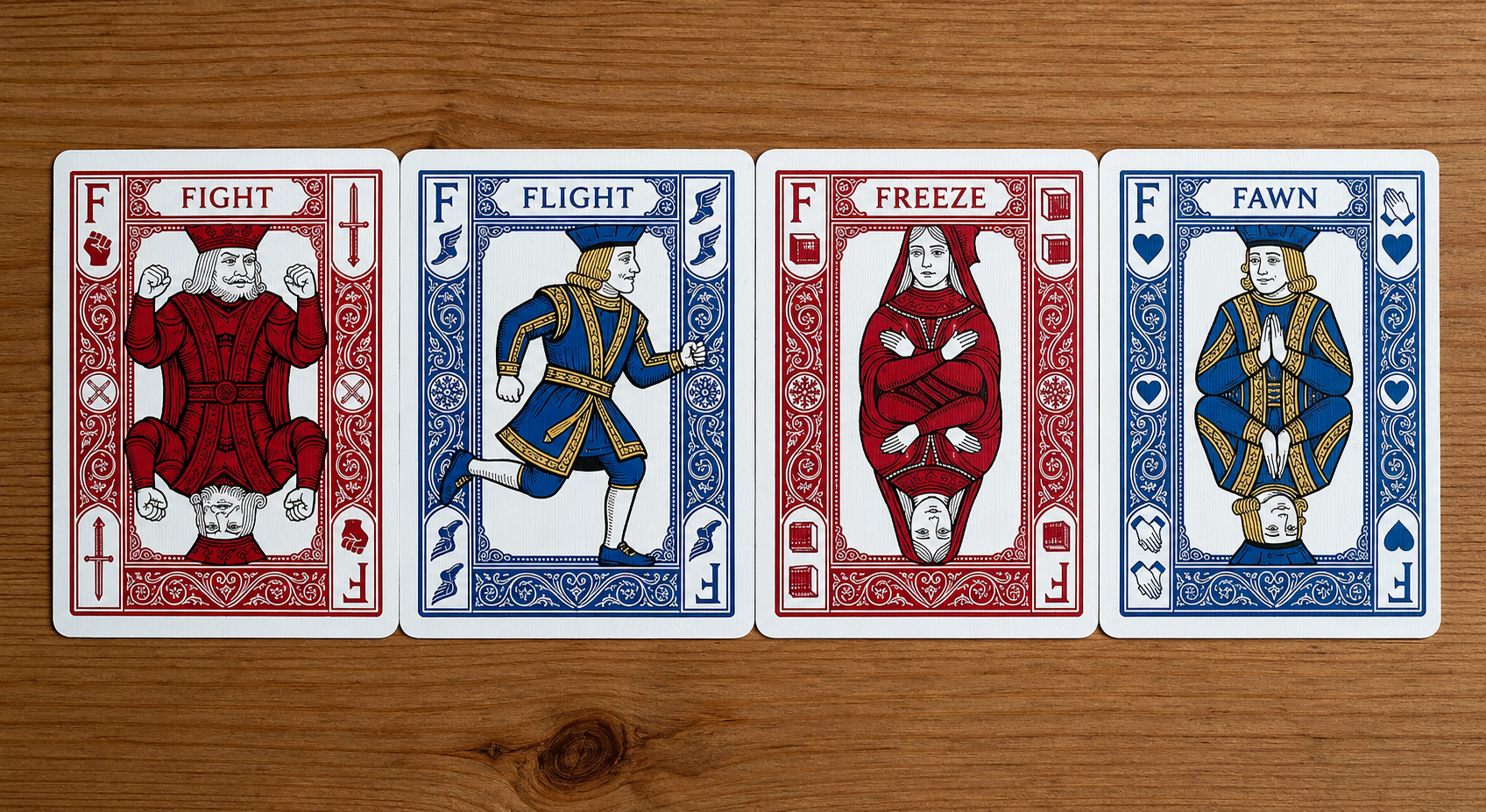
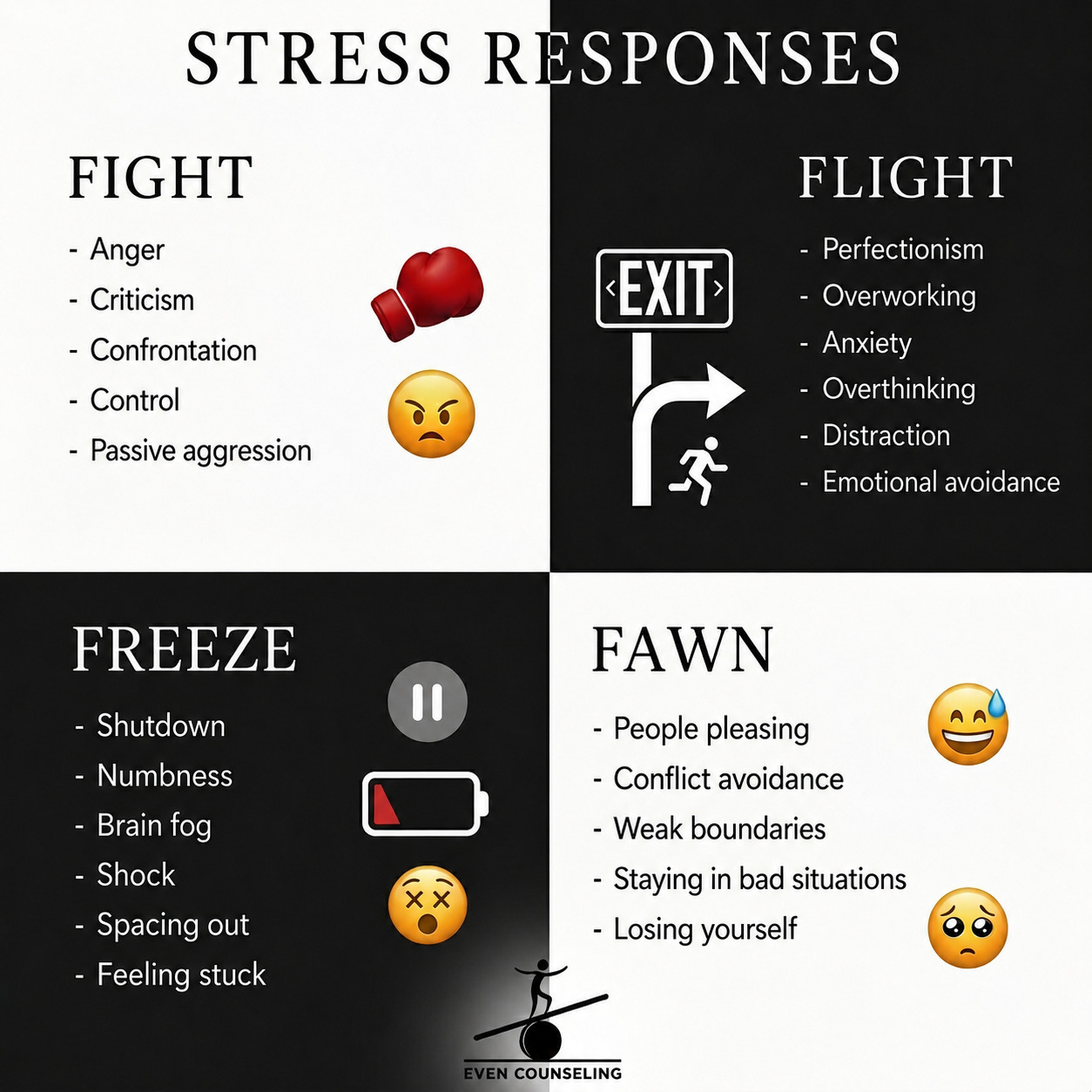
Fight: This response attempts to manage stress by confronting it head on. It turns up the energy to push back against a threat or change an uncomfortable situation. This often looks like irritability, a tight jaw, micromanaging, or becoming critical and argumentative when things feel out of control.
Flight: This response attempts to manage stress by creating distance from the problem. It often shows up as chronic overworking, packing your schedule to avoid difficult emotions, an endlessly spinning mind, impulsivity, or literally walking away when a conversation gets uncomfortable.
Freeze: This response attempts to manage stress by pausing, conserving energy, or waiting. When a problem feels too overwhelming, your system hits the brakes to protect you, resulting in sudden brain fog, feeling physically heavy, numb, or exhausted, hiding away from social commitments, or mindlessly scrolling on your phone.
Fawn: This response attempts to manage stress by attuning to others and connecting with them. It can take the form of flattery, nervous laughter, chronic people-pleasing, over-apologizing, saying "yes" when you want to say "no," and struggling to maintain boundaries.
A Few Things to Keep in Mind
These patterns are learned adaptations.
We started learning some of these patterns when we were babies.
We do what has worked before.
We often respond out of habit and with very little conscious processing.
These patterns do not necessarily reflect who we are or who we want to be.
These are not personality flaws.
This is what stress does to us.
With awareness, we can begin to change them.
